
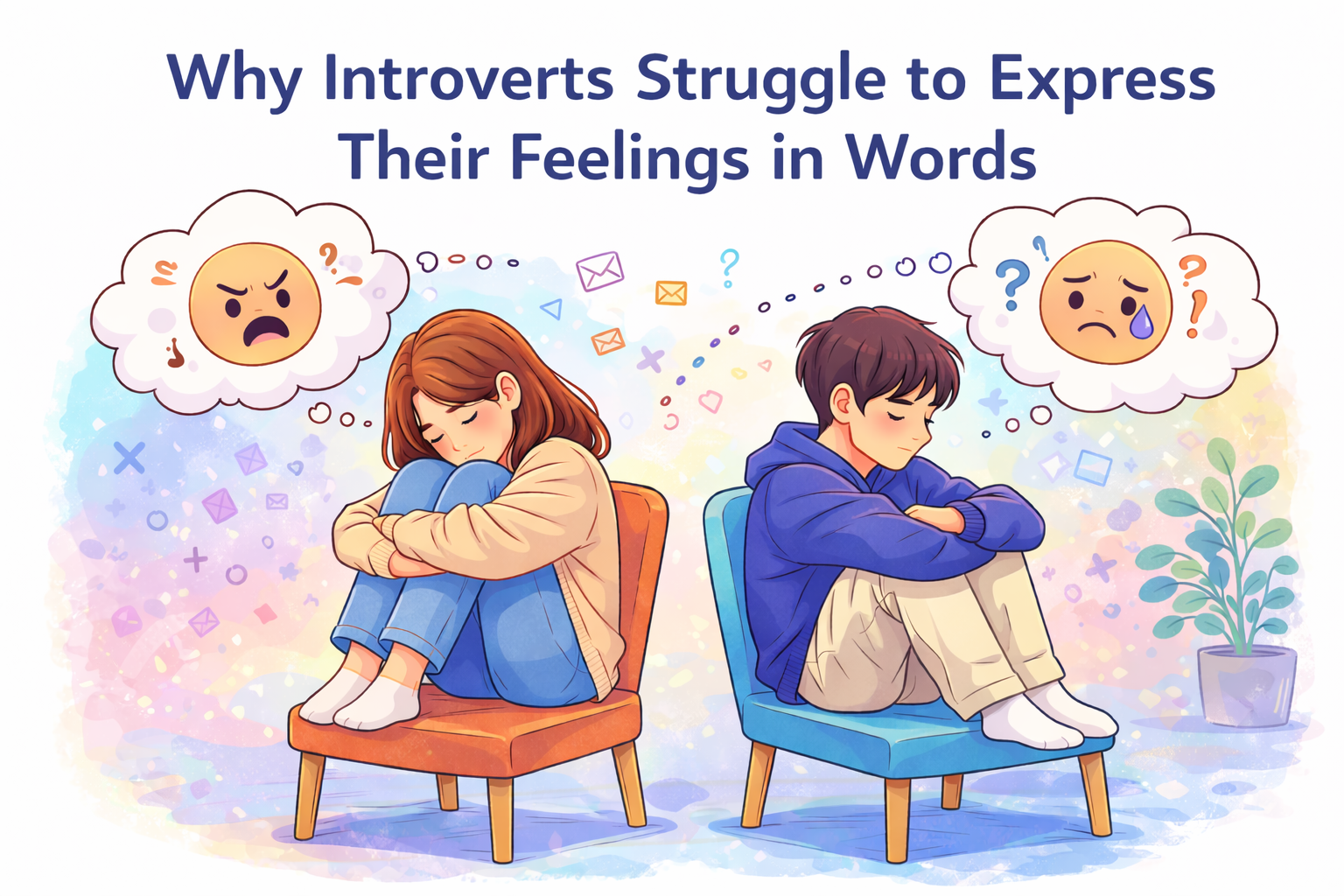
Why Introverts Struggle to Express Their Feelings in Words — if you are an introvert, you have probably felt this many times.
You feel deeply.
You care a lot.
There is so much going on inside your heart.
But when it’s time to speak, the words get stuck.
People often think you are distant, cold, or emotionally unavailable.
The truth is, your mind is not empty — it is just calm and quiet.
In this article, we will understand why introverts struggle to express their feelings and why it has nothing to do with lack of love or interest.
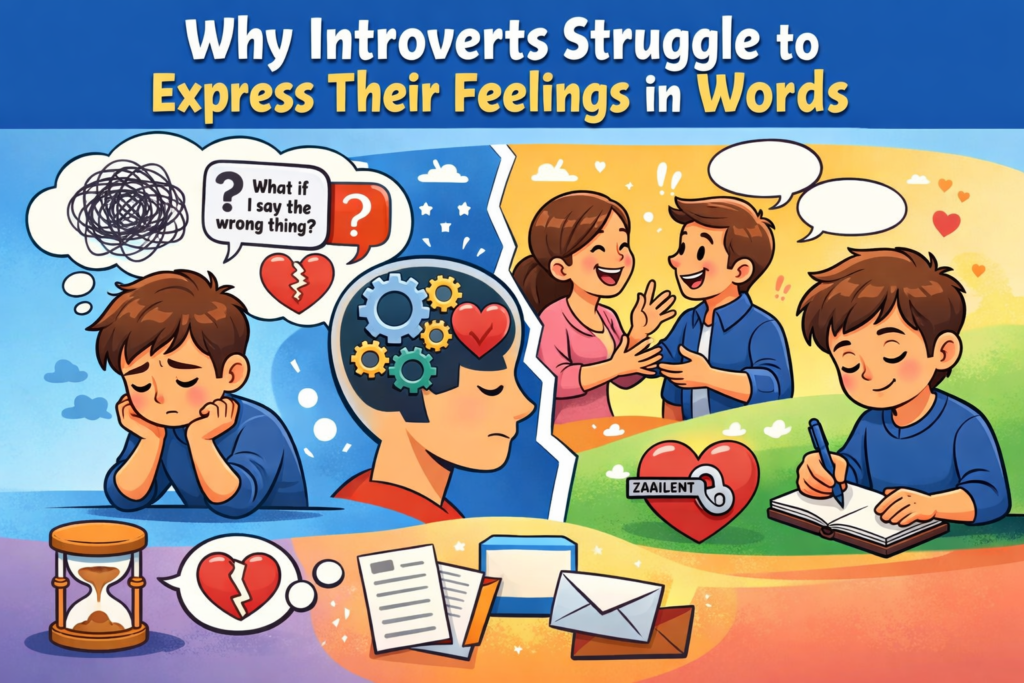
1. Why Introverts Struggle to Express Their Feelings in Words: They Process First, Then Speak
One big reason why introverts struggle to express their feelings in words is that they do not react instantly.
Introverts first try to understand their emotions inside.
Some people understand their feelings while talking.
Introverts need clarity first, and words later.
Because of this delay, others see silence.
But in reality, when introverts stay quiet, a lot is happening inside their mind.
also read this Introverts Love Deeply So Why Can’t They Show
2. Fear of Saying the Wrong Thing
Another reason why introverts struggle to express their feelings in words is fear.
Introverts are not silent because they have nothing to say.
They are silent because they care too much.
Thoughts like these run in their mind:
- “What if I say it the wrong way?”
- “What if I am misunderstood?”
- “What if this creates a problem?”
This fear stops their feelings before they come out.
3. Overthinking Makes Feelings More Confusing
Overthinking is a major reason why introverts struggle to express their feelings in words.
Before speaking, introverts replay the conversation many times in their head.
Because of this:
- The moment passes
- Feelings become confusing
- Words start feeling not good enough
Then the introvert thinks:
“It’s better to stay quiet than say something incomplete.”
4. Emotional Vulnerability Feels Risky for Introverts
For many people, emotional expression is easy.
But for introverts, this explains why introverts struggle to express their feelings in words.
Sharing feelings means showing your inner world.
If introverts were judged before,
ignored,
or forced to talk —
they naturally go into self-protection mode.
Silence becomes their shield.
psychology article on emotional vulnerability
5. Introverts Prefer Depth, Not Quantity
This is another simple reason why introverts struggle to express their feelings in words.
Introverts don’t like talking too much.
They prefer meaningful and honest communication.
That’s why:
- Small talk feels tiring
- Emotional talks need the right time
- Forced conversations make them shut down
They want to speak less, but speak with clarity.
6. Writing Feels Easier Than Speaking
Many people wonder why introverts struggle to express their feelings in words, but feel comfortable writing.
Introverts often express themselves better through:
- Text messages
- Journals
- Emails
- Notes
Because while writing:
- They get time to think
- They can organize emotions
- Pressure is less
This is not avoiding communication —
it is choosing a safer and more comfortable way.
What Does This Mean in a Relationship?
Understanding why introverts struggle to express their feelings in words can change relationships.
If you are an introvert:
- You are not broken
- You are not emotionally unavailable
- You just communicate differently
If your partner is an introvert:
- Silence does not mean lack of interest
- Quietness does not mean less love
- Patience creates emotional safety
When pressure is low, introverts open up naturally.
introvert relationship guide
How Can Introverts Express Their Feelings?
Even though why introverts struggle to express their feelings in words is natural, growth is still possible.
Introverts can try:
- Talking during calm moments, not emotional peaks
- Writing first, then slowly speaking
- Saying: “I need some time to think”
- Sharing feelings in small parts
Growth does not mean changing your nature.
It means working with it.
self-growth or communication improvement resource
conclusion
Now you understand why introverts struggle to express their feelings in words.
Introverts do not lack emotions.
They just feel deeply and need time to turn emotions into words.
Silence is not empty.
Often, it is depth — waiting for the right space to be understood.
“Now tell us, in which situation do you find it most difficult to express your feelings? Share in the comments so we can all learn together.”
Why do introverts struggle to express their feelings in words?
Introverts first process emotions internally before speaking.
They want clarity, not quick reactions.
By the time they are ready, the moment often passes.
Does silence mean introverts don’t care?
No, silence does not mean lack of care.
Introverts often stay quiet because they care deeply.
They fear saying something wrong or hurtful.
Why do introverts find writing easier than speaking?
Writing gives introverts time to think calmly.
They can organize feelings without pressure.
That’s why words flow better on paper.
Are introverts emotionally unavailable in relationships?
Introverts are emotionally present but express it differently.
They show love through actions, not constant words.
Quiet love is still real love.
How can I communicate better with an introverted partner?
Give them time and emotional safety.
Avoid forcing conversations or quick answers.
Patience helps introverts open up naturally.
Can introverts learn to express their feelings better?
Yes, without changing who they are.
Small steps like writing first can help.
Growth means comfort, not loudness.
Why do introverts stay silent even when they feel a lot?
Introverts feel emotions very deeply inside.
They need time to understand those feelings first.
Silence is often thinking, not ignoring.
How can introverts slowly improve communication without pressure?
They can start by writing their feelings first.
Choosing calm moments helps reduce fear.
Small, honest steps work better than forcing change.